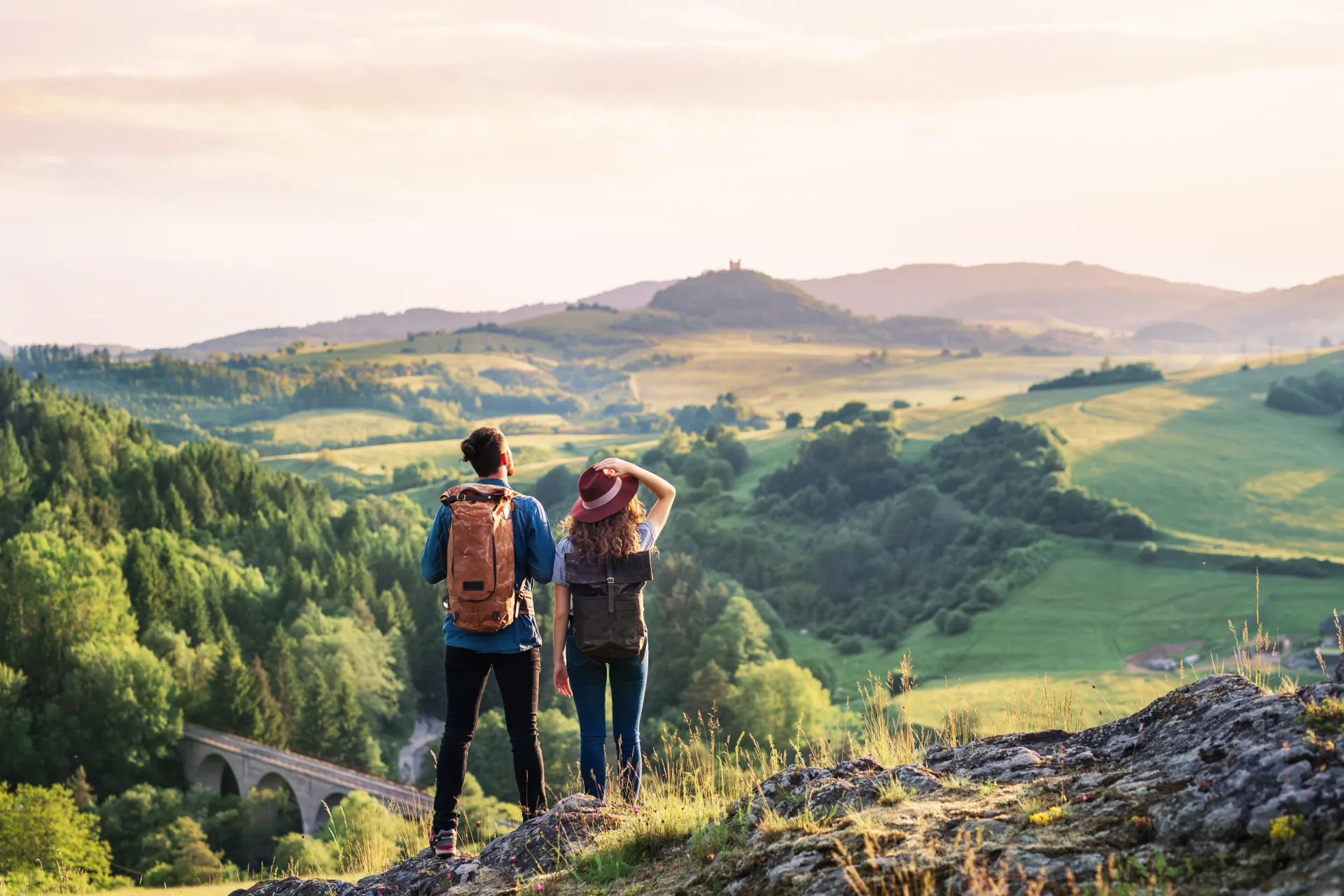
A visit to the Ortenau district is always worth it. With 1,700 hours of sunshine a year, 21 designated swimming lakes, several Michelin-starred restaurants, and 25 Christmas markets, the Ortenau is one of the most diverse regions in southwestern Germany.
The Ortenau district is the largest district in Baden-Württemberg. About 445,000 people live here in 51 cities and communities. It is just under 60 kilometers long, over 30 kilometers wide, and stretches from the Rhine to the Black Forest. Ortenau is one of the most scenically diverse regions in southwestern Germany. For tourists, this is a region that combines typical German characteristics with a surprisingly Mediterranean lifestyle. Here, vineyards, orchards, half-timbered houses, dense forests, and cozy village festivals come together. Life in the Ortenau region is characterized by tradition, a love of nature, culinary delights, and a unique blend of German orderliness and Baden serenity. A different take on “www”: The region also likes to describe itself using the three “W”: forest (“Wald”), wine, and Williams Pear.
This Baden-style calmness is also reflected in the region’s distinctive dialect—an Alemannic variant of German. For example, there’s a saying in the region that goes, “When it rains, it won’t dry up.” Literally: “When it rains, it doesn’t get dry.” Meaning: A matter-of-fact observation that certain things cannot be changed. Why it’s funny: The phrase sounds trite – but it’s a symbol of the pragmatic calmness of the people of Baden.
The Ortenau region is located right next to France and shares a border of about 60 kilometers with its neighbor. This creates a unique international atmosphere. You can enjoy a croissant in France in the morning, go hiking in the Black Forest just a few minutes later, and enjoy a glass of wine at a wine tavern in the evening – all of this is easily possible here. The region's proximity to the European city of Strasbourg, in particular, makes it attractive to international visitors.
The Ortenau district has a lot to offer for tourists. In addition to 1,000 km of marked hiking trails, nature lovers will find 21 swimming lakes and an extensive network of mountain bike trails. But culture lovers will also find plenty to enjoy: with 90 museums, 12 castles and palaces, and of course 70 wine festivals, there’s something for everyone.
More than just rollercoasters: The “Europa-Park” in Rust
Internationally known, though perhaps not always associated with the region, is a small town with a population of just 1,000: Rust. This is where Europa-Park Rust is located, where you can take a journey through Europe in a single day. With its European-themed areas, Europa-Park is more than just an ordinary amusement park with roller coasters. Different sections of the park represent different countries, featuring typical architecture, restaurants, and attractions designed to evoke the atmosphere of each country.
It is worth noting that Europa-Park has always been and remains a family-owned business. It is run by the Mack family, who originally manufactured roller coasters and fun rides. Even today, many of the park's attractions are developed by this company. The park is of great economic importance to the Ortenau region. Thousands of people from the region work there or benefit (indirectly) from tourism and the theme park, which welcomed more than seven million visitors for the first time in 2025.
The Cockoo Clock: Origin of a German cliché
Another world-famous symbol of German tradition also originates from the Black Forest: the cuckoo clock. In the old days, farmers used to carve cuckoo clocks by the fireplace in the winter. Today, the manufacture of these clocks is an important craft in the region. Artfully carved one-of-a-kind pieces, in particular, are a rarity. At the “Uhrenwerk Experience Village,” visitors can watch how cuckoo clocks are made and, of course, stock up on souvenirs.
Many traditional cuckoo clocks feature typical Black Forest motifs: carved animals, pinecones, or little houses. The design of a small Black Forest cottage with a roof and shutters is particularly common. The bird is moved by a complex system of gears, weights, and small bellows, which produce its characteristic sound. Although the technology is relatively old, it still fascinates visitors today.
Culinary and cultural collection
The region is also home to some of Germany's culinary classics: Black Forest cake, ham, and fine wine. Since the Ortenau region is one of the warmest in Germany, winegrowing has flourished here. Many families have been running small wineries for generations. In the summer, they open so-called "Straußwirtschaften” – simple taverns located right on the winemakers' properties – for a few weeks, where they serve their own regional wines. You can tell that a wine tavern is open by a branch, broom, wreath, or similar symbol displayed in front of the property. Selling their own wine at a wine tavern helps winemakers clear out their cellars in preparation for the new harvest in the fall.
Cultural traditions: The "fifth season" isn't celebrated only in the carnival strongholds of Cologne, Düsseldorf, and Mainz. Different customs and traditions are also observed in the Black Forest and, consequently, in the Ortenau region as well. For example, the town hall is "conquered" through the carnival president's famous balcony climb, and politics is poked fun at during meetings of the carnival societies. Unlike in the major centers mentioned above, not all communities hold a colorful and festive parade on Rose Monday. Instead, young and old, deliberately dressed in shabby clothes – wearing old, straw-stuffed bedsheets and their faces blackened with soot – parade through the streets in the old tradition of the "Black Mändi" According to superstition, this is meant to drive away the last demons of the cold winter months so that the long-awaited spring can arrive.
In short: The Ortenau District is a region where nature, tradition, international flair, and a zest for life come together. Visitors will find a wide variety of vineyards, half-timbered houses, amusement parks, cuckoo clocks, and plenty of delicious food all within a small area.